 impulora.
The Empty Restaurant Effect: Why People Don't Join Empty Channels
The empty restaurant effect is our habit of choosing what other people have already chosen. When we lack information, an empty dining room, channel or profile looks suspicious, while a busy one looks safe. That is why new projects struggle to start from zero: visitors are missing the first proof that the place is worth their time.
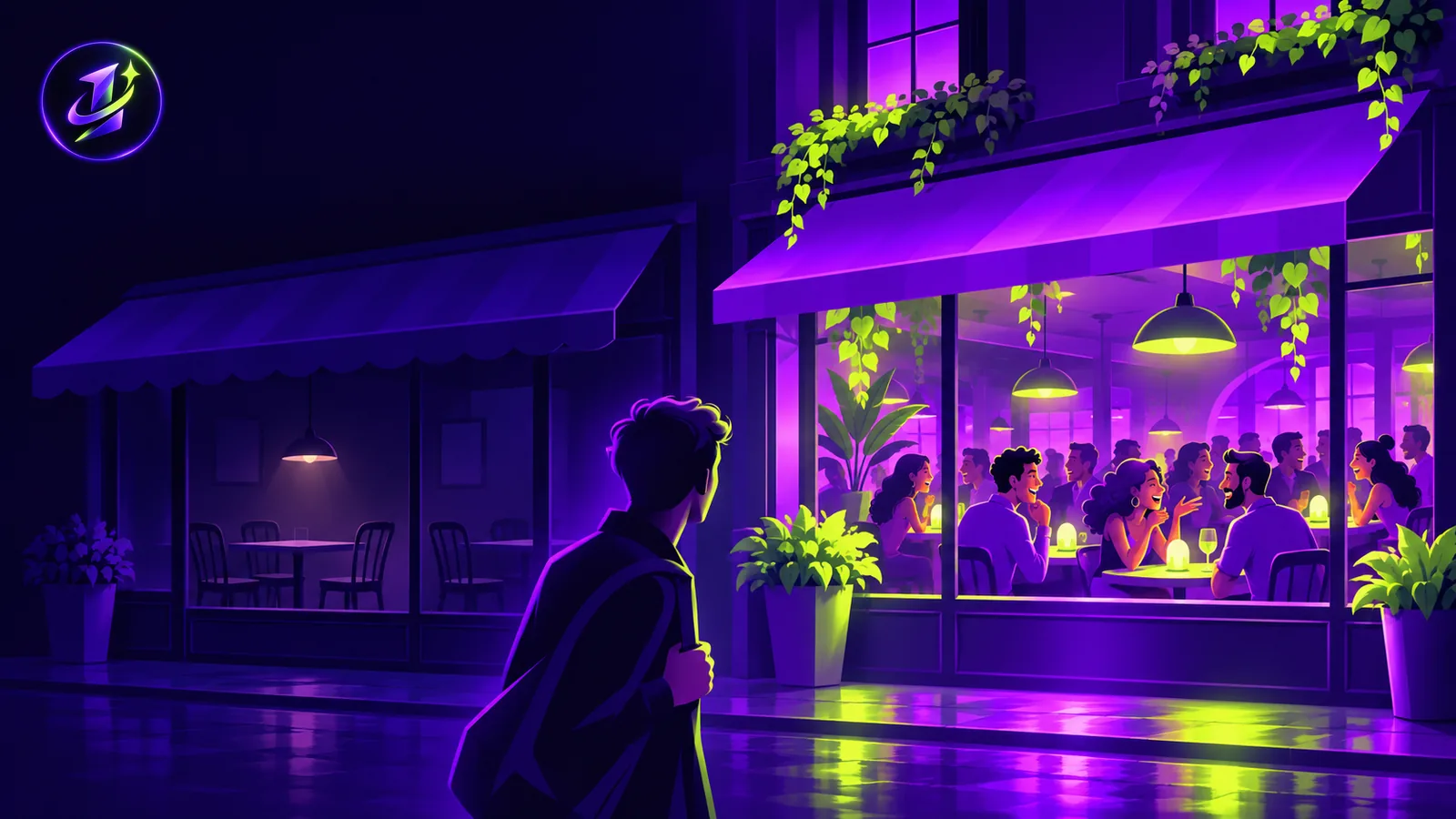
Picture two restaurants on the same street. Similar interior, similar menu, similar prices. The first one is empty; in the second, every table is full and people are talking. You will most likely walk into the second one — not because you have tried the food, but because other people's presence seems to say: this place is fine.
Channels and social media profiles work the same way. Someone opens a Telegram channel, sees 12 subscribers and a handful of views under each post — and leaves before reading the first one.
What the empty restaurant effect is
When we cannot judge quality ourselves, the brain takes a shortcut: look at what others chose. A full dining room becomes social proof — we assume the guests have already tested the food, the service and the prices. An empty room raises questions instead: is the food bad, is it overpriced, is something wrong?
Sometimes the answer is simpler: the place just opened. But the passer-by doesn't know that and picks the safer option. The loop closes: no first guests → no visible demand → new guests hesitate → still no first guests.
Behavioral economists study this as observational learning: people don't blindly copy the crowd, they use other people's choices as a hint about quality they can't check yet.
What the research shows
This is more than a metaphor — the effect has been measured in field experiments.
- Restaurants in China. Hongbin Cai, Yuyu Chen and Hanming Fang showed some diners the restaurant's five most popular dishes. Demand for those dishes rose by 13–20%. Simply listing the same dishes without the "most popular" label had no effect — what worked was information about other diners' choices.
- Two identical campus food stands. Arthur Fishman, Ram Fishman and Uri Gneezy watched students choose between two nearly identical neighboring stands. While many students were new on campus, they clearly preferred the busier stand. Once most of them knew both places, the pattern disappeared.
- A wedding services website. Catherine Tucker and Juanjuan Zhang showed visitors how many people had already clicked on each vendor. Popularity information helped niche vendors the most: if people pick them despite their narrow appeal, they must be good.
- Online doctor appointments. Isabel Kaluza, Guido Voigt and Friederike Paetz found that patients read quality from how booked a schedule is. The effect is non-linear: both a completely empty and a fully booked calendar can put people off, while a moderately busy one looks best.
The key takeaway for marketing: other people's choices matter most where we have no experience of our own. A new channel or profile is exactly that situation.
One caveat: these experiments studied restaurants, food stands, vendors and doctor appointments. They do not prove that more followers or views will lift social media sales by the same percentage. The mechanism is similar; the numbers don't transfer one-to-one.
Why an empty channel puts off even your friends
In our experience, the empty restaurant effect kicks in earlier than people expect. Even a small shop opening a Telegram channel or an Instagram page runs into it with its own friends.
The owner invites friends, colleagues and regular customers — and they land in a channel with five subscribers and zero reactions. It feels awkward, like arriving at an opening party to an empty room. Some will subscribe out of politeness, but they won't engage, because nobody else does either.
That's why a new channel needs at least a minimal base of members and posts at launch. A visitor should understand within seconds where they are, what's going on here and what's in it for them.
A little activity beats none at all
Interestingly, a first impression doesn't require a huge audience. People prefer some activity over no activity at all.
Many even like a small but lively channel more: it feels like being among the first — almost exclusive. A complete lack of activity, on the other hand, is alarming: is the project alive, does the author reply, is it worth the time?
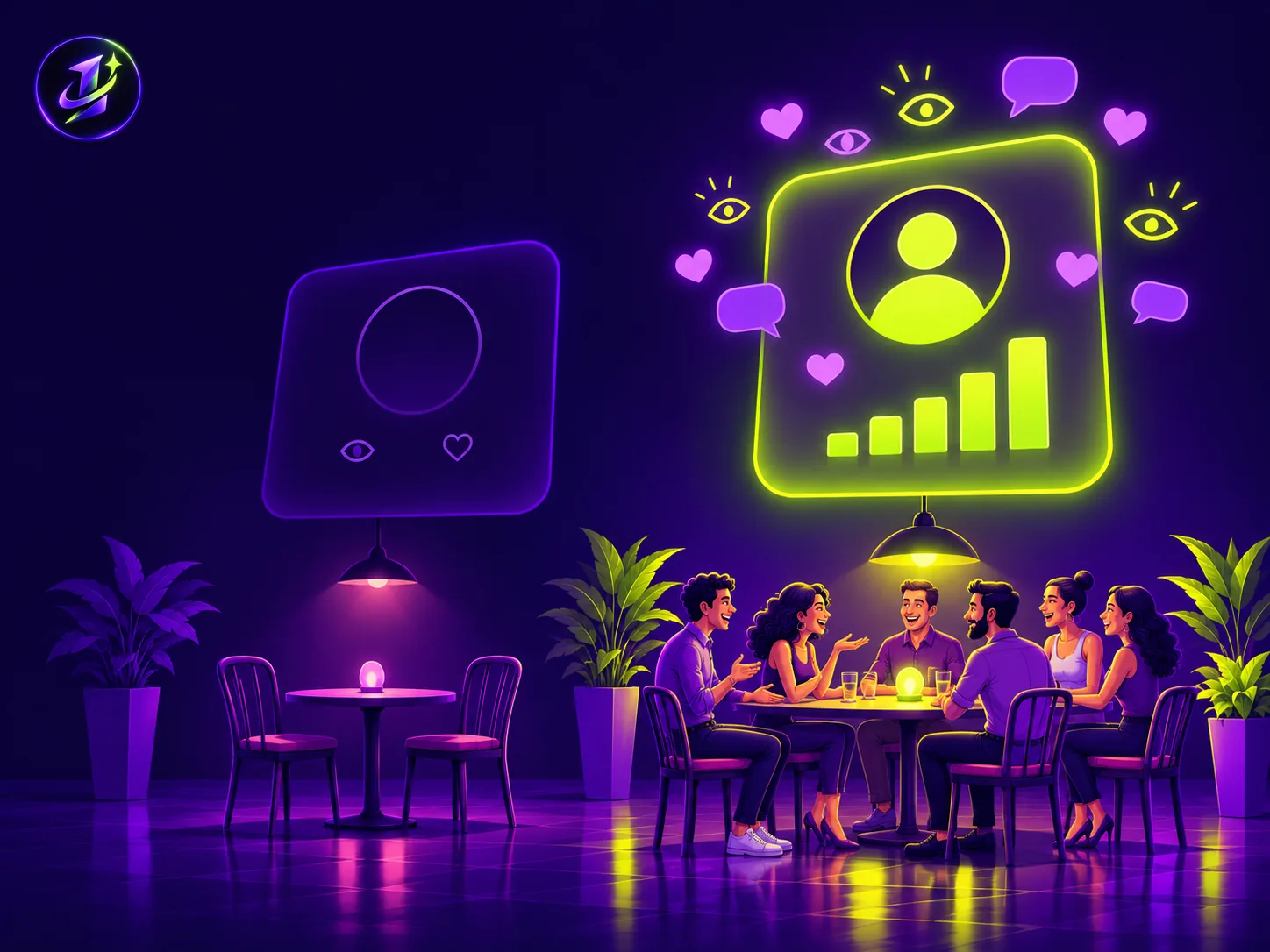
In a restaurant, you can physically see the guests. Online, their presence is conveyed by numbers and actions: subscribers, views, reactions, comments, replies from the author. That's what a visitor looks at in the first few seconds.
Which signals visitors notice
The set of signals varies by platform, but the logic is the same: visitors look for signs that someone is here and something is happening.
| Signal | What the visitor thinks | What to do at launch |
|---|---|---|
| Subscriber count | "Has anyone come here yet?" | Build a starting base: your network, invited people, first subscribers |
| Post views | "Does anyone actually read this?" | Make sure views don't lag far behind subscribers |
| Reactions and comments | "Are there real people here?" | Ask questions, reply, give people a reason to react |
| Posting frequency | "Is this project alive?" | Post regularly, not once a month |
| Description and pinned post | "What do I get here?" | Explain the topic, the value and the next step in 5 seconds |
Look at the chain rather than one impressive number: content → attention → engagement → conversion. Marketers call the share of readers who view and react the engagement rate (ER) — and a visitor estimates it by eye in a couple of seconds.
10,000 subscribers with 30 views per post look worse than 800 subscribers with 250 views.
How to beat the empty restaurant effect
1. Set up the storefront. A clear name, avatar, description and pinned post: who you are, what the channel is about, what readers get. Sometimes this works better than any statistic.
2. Don't invite people into an empty room. Before sending invitations, publish a few useful posts: examples, answers to common questions, case studies. New visitors need a reason to stay.
3. Build the first base. Invite your own network, mention the project in relevant communities, and add some starting activity — subscribers, views and reactions in sensible proportions. The goal is that the first real visitors don't walk into a void.
4. Measure what matters. Track not only subscribers and views but also clicks, inquiries and purchases. That shows the difference between a nice storefront and a working business.
Where IMPULORA fits in
IMPULORA is a service that helps new projects get their first signals of activity on social media. For Telegram, that means members, post views, reactions and auto views for new posts; for Instagram — followers, likes and Reels views. Current prices and limits are on the prices page.
You order with a public link — no account password needed. The website and the Telegram bot @IMPULORA_ROBOT share one balance, order status is visible in your dashboard, and if part of an order isn't delivered, the money for that part goes back to your balance under our refund policy.
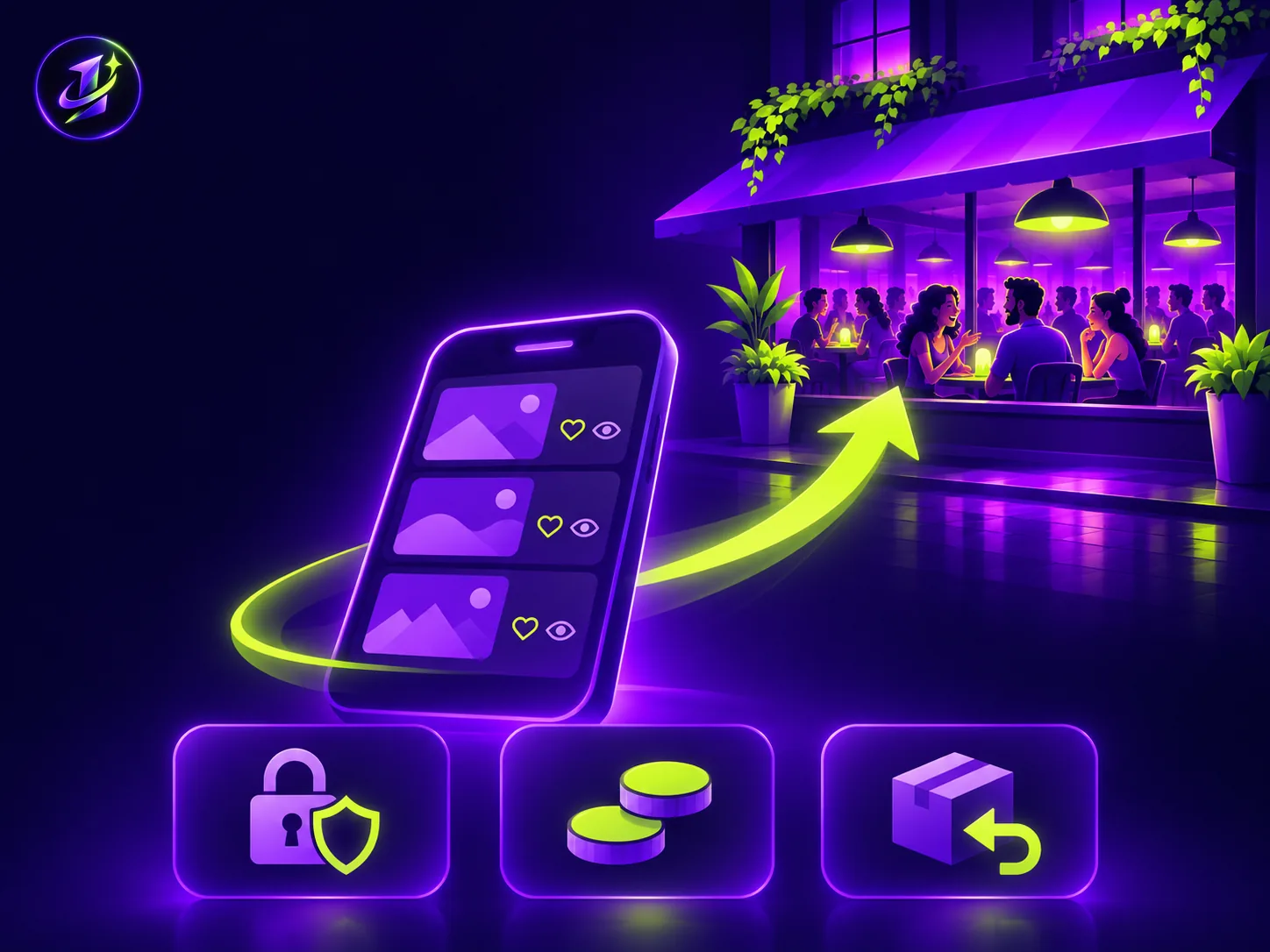
To be honest about the limits: starting numbers change the first impression, but they don't replace interesting content, real people and a good offer. Artificial activity may go against the rules of some platforms, and neither retention nor sales are guaranteed. It's a launch tool, not a substitute for growth.
The bottom line
The empty restaurant effect shows how much the first few seconds decide. Until people have their own experience, they look at others.
Emptiness scares people away more than modest but genuine activity.
Still, a full dining room doesn't prove great food, and a big counter doesn't prove a strong community. The goal of a new project is not just to look alive but to become a place people want to come back to: with clear value, regular content and its first real members.
FAQ
What is the empty restaurant effect in simple terms?
It's the tendency to choose what others have already chosen when we can't judge quality ourselves. An empty restaurant, channel or profile raises doubts, while a busy one feels tested — even if both are equally good.
How many subscribers does a channel need so it doesn't look empty?
There is no universal number. Signs of life matter more than size: fresh posts, views, reactions and a clear description. A small, active channel looks more convincing than a big, silent one.
Why don't my friends join my new channel?
Often they simply feel awkward in an empty place: no posts, no reactions, no other people. Prepare a few posts and some starting activity before you invite them, so they understand what they're joining.
Does the empty restaurant effect apply to Instagram and TikTok?
Yes, the mechanism is the same: people judge a profile by its followers, likes, views and comments before they watch any content. The signals differ, but the "empty means something's wrong" logic is shared.
Can I just buy subscribers and solve the problem?
Starting subscribers and views help with the first impression, but they don't bring customers on their own. They work when the channel already has useful content and a clear offer — and you have a plan to attract a real audience.
Research and sources
- Cai H., Chen Y., Fang H. (2009). Observational Learning: Evidence from a Randomized Natural Field Experiment. American Economic Review, 99(3), 864–882.
- Fishman A., Fishman R., Gneezy U. (2019). A Tale of Two Food Stands: Observational Learning in the Field. Journal of Economic Behavior & Organization, 159, 101–108.
- Kaluza I., Voigt G., Paetz F. (2024). Empirical Studies on the Impact of Booking Status on Customers’ Choice Behavior in Online Appointment Systems. Journal of Business Economics, 94, 187–224.
- Tucker C., Zhang J. (2011). How Does Popularity Information Affect Choices? A Field Experiment. Management Science, 57(5), 828–842.